The Directive
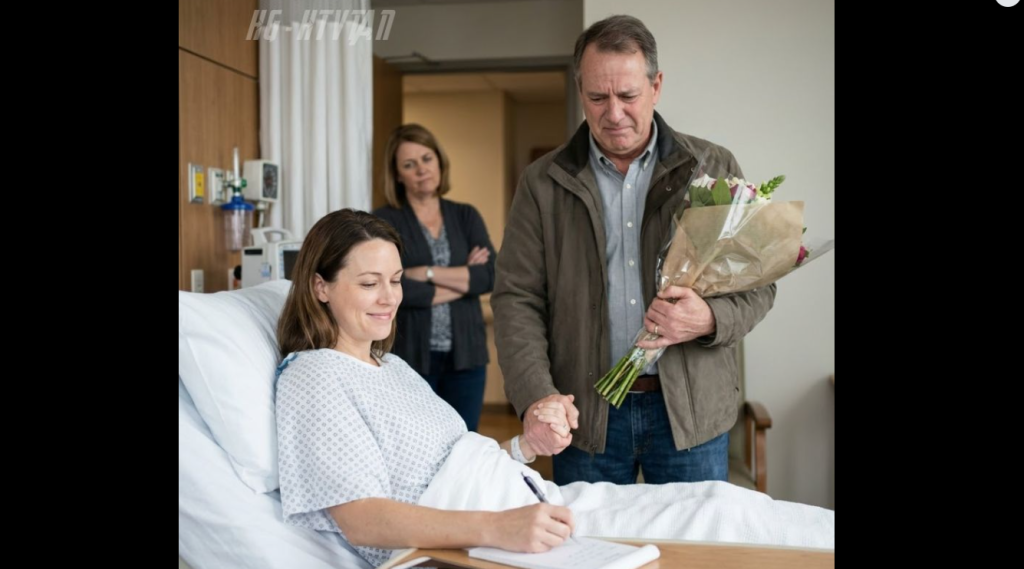
My father signed a directive to avoid the cost of my recovery. He never expected what happened after I woke up. “Let her go. We’re not authorizing the procedure,” my father told the doctor while I lay unconscious in St. Catherine’s ICU. He signed the paperwork like he was checking a box and walking away. Three weeks later, I opened my eyes to harsh hospital light and the steady rhythm of a monitor—a sound I’d heard for years on the other side of the bed. The first face I saw wasn’t my father’s or my sister’s. It was Pat Walsh, our head nurse, holding my hand. My name is Wendy Thomas. I’m twenty-nine years old. I’m a registered nurse. Pat didn’t begin with comfort. She began with facts. My father had visited once. He went straight to billing, asked for estimates, then told the surgeon no additional procedures were authorized. She placed a copy of an incident report on my blanket—timestamped 11:18 p.m., Tuesday night, my father’s signature beneath the authorization.
When he finally came to see me, he brought flowers and carefully practiced grief. He squeezed my hand and said, “I never left your side,” as if the nurses hadn’t watched the hallway remain empty. I didn’t challenge him. I smiled and let him perform. Because while I was unconscious, he’d made another move. Not on my body. On my grandmother’s house—the small brick home with the porch swing that creaked in the wind. Seven months before she died, my grandmother had whispered something I didn’t understand. “When the time comes,” she said, “a man named Kesler will find you.” Lying in that hospital bed, I searched my phone and found the number I had saved and forgotten. A calm voice answered. “Donald Kesler.” I gave my name. He didn’t sound surprised. Instead, he asked, “Has your father been near your grandmother’s property recently?” He checked county records. Then his tone changed. “The deed was transferred,” he said. “And a new mortgage has been filed against the property.”
I asked Pat for a pen. I asked Kesler for the filing numbers. Pat watched me write dates, amounts, and names. “Wendy,” she whispered, “are you sure you’re strong enough for this?” I looked at my nurse’s badge clipped to the bedrail—a reminder of who I was before the coma. “I’m not fighting,” I said quietly. “I’m documenting.” That afternoon my father texted: Don’t worry. I’m handling Grandma’s estate. I replied: Thanks, Dad. Then I turned the phone face down. By the next morning, Kesler outlined the next steps, and my grandmother’s plan finally came into focus. It wasn’t loud. It wasn’t emotional. It was legal. Twenty-four hours after I regained consciousness, my father’s accounts were frozen and his certainty began to fracture. He called repeatedly. For the first time in my life, I let it ring. Because he forgot something important about me. I wasn’t raised to argue. I was raised to keep records.
Let me tell you how I got here—lying in a hospital bed, discovering that the man who’d tried to let me die had also tried to steal my inheritance while I was unconscious.
My name is Wendy Thomas. I’m twenty-nine years old, and I work as a registered nurse in the cardiac unit at St. Catherine’s Hospital.
I love my job. I love helping people through their worst moments, being the calm voice when everything feels chaotic, holding hands when families can’t be there.
I never expected to be on the other side of that care.
The accident happened on a Tuesday night.
I was driving home from a late shift, exhausted, navigating rain-slicked roads. A truck ran a red light and hit me broadside.
I don’t remember the impact. I don’t remember the ambulance ride. I don’t remember the first two weeks in the ICU.
What I learned later was that I’d suffered a traumatic brain injury, broken ribs, internal bleeding, and a collapsed lung.
I was in a medically induced coma while the swelling in my brain went down.
The prognosis was uncertain. I might wake up. I might not. And if I did wake up, there was no guarantee I’d be the same person.
My emergency contact was my father, Robert Thomas.
Pat Walsh was the head nurse in the ICU—a woman I’d worked with for three years, someone I respected and trusted.
She was there when my father arrived the first time.
According to Pat, he looked tired and stressed. He asked the right questions. He seemed concerned.
Then he went to billing.
He asked for cost estimates. How much would ongoing care cost? How much were the additional procedures the doctors were recommending?
When the surgeon explained that I needed a cranial pressure relief procedure to prevent permanent brain damage, my father asked: “What happens if we don’t authorize it?”
The surgeon was blunt: “She’ll likely die. Or suffer severe, irreversible brain damage.”
My father nodded slowly. Then he said: “Let her go. We’re not authorizing the procedure.”
Pat was standing in the hallway when she heard this. She immediately paged the hospital attorney and the ethics board.
Because what my father was asking for—withdrawing life-saving treatment from someone with a good chance of recovery—wasn’t a medical decision. It was abandonment.
The hospital overruled him.
The ethics board reviewed the case and determined that the procedure was medically necessary and had a high likelihood of success. They performed it over my father’s objections.
He was furious. He filed a complaint. He demanded to speak to administrators. He threatened to sue.
But the procedure was already done. And I stabilized.
Pat documented everything. Every conversation. Every decision. Every time my father asked about costs instead of outcomes.
She kept copies of the incident reports. The timestamped notes. His signature on the form declining treatment.
Because she had a feeling she’d need them.
Three weeks after the accident, I woke up.
The first thing I saw was harsh fluorescent light. The first sound was the steady beep of a heart monitor—a sound I’d heard thousands of times in my career, but never from this perspective.
The first face I saw was Pat’s.
She was holding my hand. Her eyes were red.
“Welcome back,” she said quietly.
My throat was raw from the breathing tube. I couldn’t speak yet. But I squeezed her hand.
Pat didn’t start with comfort. She started with facts.
“Your father visited once,” she said. “He went straight to billing. He tried to refuse the surgery that saved your life. We overruled him.”
She placed a folder on my bed. Inside was an incident report, timestamped 11:18 p.m., three weeks ago. My father’s signature was at the bottom, next to a checkbox that read: Decline recommended procedure.
I stared at it, my mind struggling to process.
My father had tried to let me die to avoid the medical bills.
When my father finally came to visit—two days after I woke up—he brought flowers and a carefully practiced expression of relief.
“Wendy, thank God,” he said, squeezing my hand. “I never left your side. I was so worried.”
Pat was in the hallway. I could see her through the window, watching.
I didn’t challenge him. I just smiled weakly and let him talk.
He told me about how hard it had been, how scared he was, how grateful he was that I’d pulled through.
He didn’t mention the billing office. He didn’t mention the declined procedure. He didn’t mention that the nurses had barely seen him.
I just nodded and let him perform his role.
Because I’d learned something important during my years as a nurse: people reveal themselves through their actions, not their words.
And my father’s actions were very clear.
That evening, after my father left, Pat came back.
“There’s something else you need to know,” she said carefully.
“What?”
“While you were unconscious, there was activity on your grandmother’s estate.”
My grandmother, Dorothy Thomas, had passed away seven months earlier. She’d left me her house—a small brick home with a porch swing and a garden she’d tended for forty years.
It wasn’t worth a fortune. Maybe $200,000. But it was mine. She’d been very clear about that in her will.
“What kind of activity?” I asked.
“I don’t know exactly. But your father mentioned it to one of the nurses. Said he was ‘handling the estate’ while you recovered.”
A cold feeling settled in my chest.
Seven months before my grandmother died, she’d pulled me aside during a family dinner.
She was thin by then, the cancer eating away at her, but her mind was sharp.
“Wendy,” she said quietly, “when the time comes, a man named Kesler will find you. Donald Kesler. He’ll help you with… certain things.”
“What things?”
“You’ll know when it happens. Just trust him.”
She handed me a business card. I’d saved it in my phone and then forgotten about it.
Now, lying in that hospital bed, I searched my contacts. There it was: Donald Kesler, Attorney at Law.
I called the number.
A calm, professional voice answered. “Donald Kesler.”
“Mr. Kesler, my name is Wendy Thomas. I think my grandmother Dorothy Thomas asked you to—”
“I’ve been waiting for your call,” he interrupted gently. “How are you feeling?”
“I’m… recovering. From an accident.”
“I heard. I’m very glad you’re awake.” He paused. “Has your father been near your grandmother’s property recently?”
My stomach dropped. “I don’t know. Why?”
“Give me a moment.”
I heard typing. Then silence. Then his tone changed.
“Ms. Thomas, the deed to your grandmother’s property was transferred three weeks ago. From the estate trust into your father’s name. And two days ago, a mortgage was filed against the property for $150,000.”
I couldn’t breathe.
“While I was in a coma.”
“Yes.”
“That’s fraud.”
“Yes, it is. And we’re going to fix it.”
I asked Pat for a pen and paper.
While Kesler pulled records and filing numbers, I started writing everything down. Dates. Amounts. Document numbers. The timeline of my father’s visits—or lack thereof.
Pat watched me work, her expression a mix of concern and admiration.
“Wendy,” she whispered, “are you sure you’re strong enough for this?”
I looked at my nurse’s badge, still clipped to the bedrail. A reminder of who I was. What I did. How I’d been trained to think.
“I’m not fighting,” I said quietly. “I’m documenting.”
That’s what nurses do. We document. We create records that protect people when words fail.
And I was very, very good at my job.
That afternoon, my father texted me: Don’t worry about Grandma’s estate. I’m handling everything. You just focus on getting better.
I replied: Thanks, Dad. I really appreciate it.
Then I turned the phone face down and went back to my notes.
Kesler worked quickly.
Within 24 hours, he’d filed an emergency motion to freeze the property transfer and void the fraudulent mortgage.
He’d also filed a petition with adult protective services, alleging financial exploitation of an incapacitated person—me.
The evidence was overwhelming. The deed transfer had been notarized while I was in a coma. The signature was forged. The mortgage application listed me as a co-borrower, which was impossible since I’d been unconscious.
My father had assumed I’d either die or be too brain-damaged to notice what he’d done.
He’d been wrong on both counts.
By the next morning, my father’s bank accounts were frozen pending investigation.
The mortgage company was notified of the fraud and immediately put a hold on the $150,000 disbursement.
And Kesler filed a civil suit for fraud, forgery, and elder exploitation—elder exploitation because my grandmother’s estate had been targeted, even though she was deceased.
My father called me seven times that morning.
I let every call go to voicemail.
On the eighth call, I answered.
“Wendy, what the hell is going on?” His voice was sharp, angry. “My accounts are frozen. Some lawyer is claiming I forged documents—”
“Did you?” I asked calmly.
“What?”
“Did you forge my signature on the deed transfer for Grandma’s house?”
Silence.
“Did you take out a mortgage in my name while I was unconscious?”
“I was trying to help—”
“By stealing my inheritance?”
“It wasn’t like that—”
“What was it like, Dad? Explain it to me.”
He couldn’t. He stammered through excuses that didn’t make sense, accusations that I was being ungrateful, claims that I didn’t understand how estates worked.
I let him talk until he ran out of words.
Then I said, very quietly: “You tried to let me die to avoid paying my medical bills. The hospital has documentation of that. And while I was unconscious, you stole my inheritance. We have documentation of that too.”
“Wendy—”
“I’m not arguing with you. I’m informing you. The police are investigating. The civil suit has been filed. And you’re not getting Grandma’s house.”
“You can’t do this to me—”
“I’m not doing anything. I’m just documenting what you did. The consequences are yours.”
I hung up.
My sister called next. Allison was two years older than me, married, living in another state.
“Wendy, Dad’s freaking out. What’s happening?”
I explained. The forged deed. The fraudulent mortgage. The attempt to refuse life-saving surgery.
“That’s… that can’t be right. Dad wouldn’t—”
“Allison, I have the documents. The hospital has incident reports. The county has the forged deed. This isn’t a misunderstanding. This is fraud.”
“But why would he—”
“Because Grandma left the house to me, not him. And he thought if I died or was too damaged to notice, he could take it.”
She was quiet for a long time.
“I didn’t know,” she finally said.
“I know you didn’t.”
“What happens now?”
“That’s up to the courts. And Dad.”
The investigation moved quickly.
The forged signature was obvious once experts compared it to my actual handwriting. The timeline proved I’d been unconscious when the documents were signed. The mortgage application was fraudulent—I’d never co-signed anything.
My father was charged with forgery, fraud, and financial exploitation.
He pleaded guilty to avoid trial. He got probation and was ordered to pay restitution—though there wasn’t much to pay back since the mortgage had been stopped before he could access the money.
The house was returned to my grandmother’s estate, and then transferred to me as she’d originally intended.
My father tried to reconcile months later.
He sent a letter. Long, rambling, full of excuses and justifications.
He claimed he’d been stressed. That he’d made a mistake. That he’d only wanted to “preserve the family assets.”
He didn’t apologize for trying to let me die.
I didn’t respond.
It’s been a year since the accident.
I’m fully recovered. I went back to work six months ago. I still love being a nurse.
I live in my grandmother’s house now. I repainted the porch swing. I tend her garden. I sit on the front steps sometimes and think about how she knew, somehow, that this would happen.
She’d set up the trust to protect the house. She’d given me Kesler’s number. She’d prepared for the possibility that my father would try exactly what he tried.
She’d known her son better than I had.
People ask if I regret pressing charges against my own father.
I don’t.
Because here’s what I learned, lying in that hospital bed:
When someone shows you who they are—not through their words, but through their actions when they think you’re not watching—believe them.
My father chose money over my life. He chose theft over integrity. He chose fraud over honesty.
And when I woke up and discovered what he’d done, I chose documentation over denial.
I didn’t fight. I didn’t argue. I didn’t try to make him understand why he was wrong.
I just kept records.
Because I’m a nurse. That’s what we do.
We document. We protect. We make sure that when someone is vulnerable, there’s a record of what happened to them.
And in my case, those records saved my life twice.
Once, when the hospital overruled my father’s decision to let me die.
And again, when they proved he’d tried to steal everything my grandmother had left me.
Pat still works in the ICU. We have coffee sometimes.
She told me recently that my case changed hospital policy. Now, when family members try to decline life-saving treatment, there’s an automatic ethics review and a second opinion requirement.
“You might have saved other people,” she said. “By surviving. By fighting back.”
“I didn’t fight,” I said. “I just documented.”
She smiled. “Same thing, sometimes.”
My father lives alone now. My sister speaks to him occasionally. I don’t.
Not because I hate him. But because I finally understood something fundamental:
He saw me as a cost, not a person. An expense, not a daughter.
And when I proved too expensive, he tried to cut his losses.
The only reason I’m alive is because people who didn’t share my DNA—Pat, Kesler, the hospital ethics board—decided I was worth saving.
They saw value where my father saw burden.
They kept records where he expected silence.
And they made sure that when I woke up, I had the tools I needed to protect myself.
That Tuesday night, when my father signed a directive to let me die, he thought he was closing a chapter.
He thought I’d either die quietly or wake up too damaged to notice what he’d done.
He forgot something important about me:
I wasn’t raised to argue.
I was raised to keep records.
And in the end, those records told the only story that mattered.

Leave a Reply